
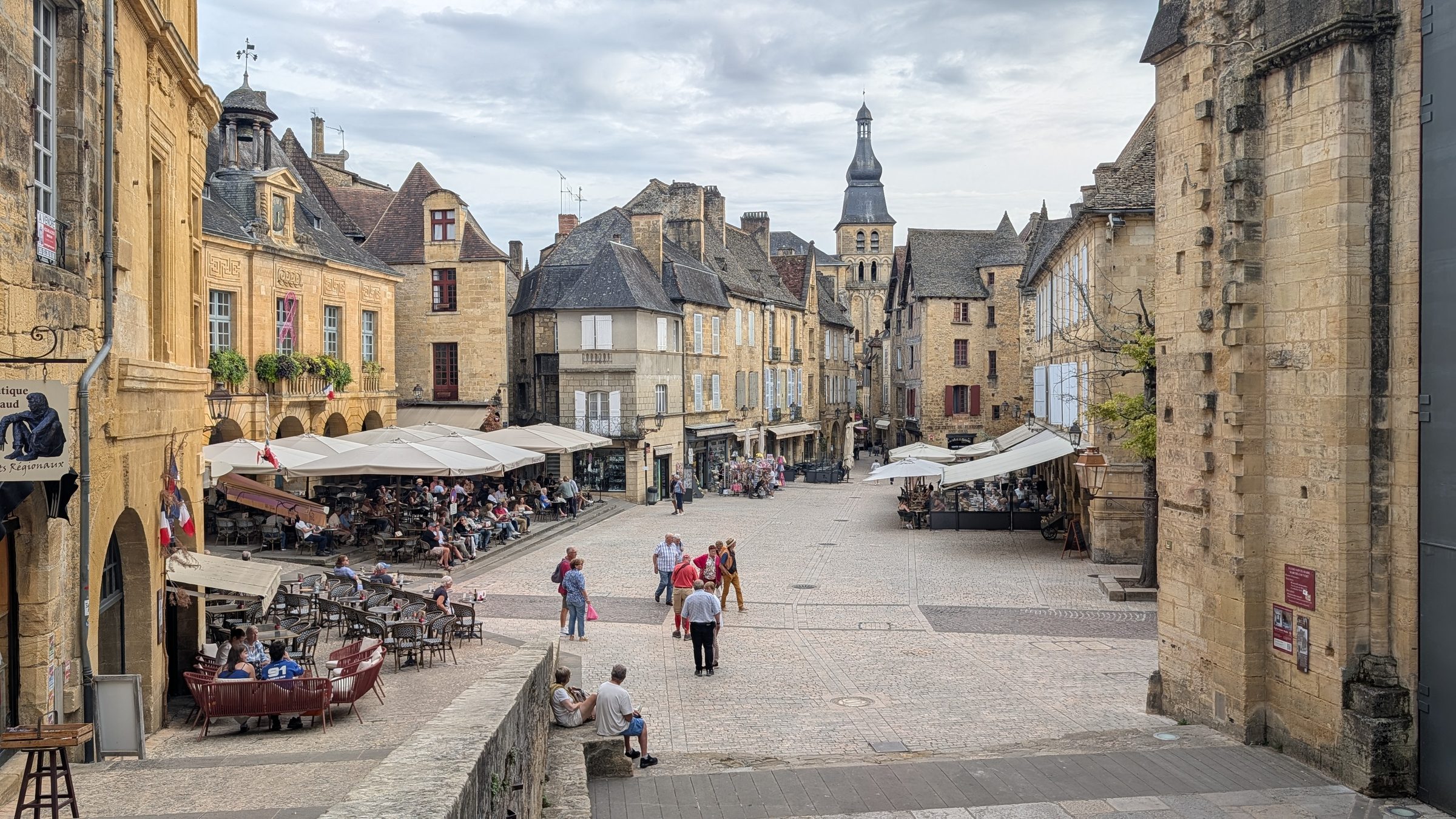
The Périgord black truffle, Tuber melanosporum, is known as the “black diamond”. It grows underground among the roots of oaks and hazels, is found by trained dogs, and is a winter crop, sold at controlled markets in Sarlat, Sainte-Alvère and Lalbenque from about December to March. Our holidays run from April to October, so on holiday you will meet the milder summer truffle instead, and the Truffle Museum in Sarlat, where a visit and tasting is included on Premium Périgord.
For the rest of the Périgord’s food, from duck confit to walnuts, see our guide to the food of the Périgord.
By Cassie ·
At a glance
Black diamond
The Périgord black truffle, Tuber melanosporum, is known as the “black diamond”.
Season
Harvested in winter, from about December to March
How it grows
Among the roots of oaks and hazels, on limestone soils
How it’s found
Today the dog is by far the most common helper
Winter markets
Sarlat, Sainte-Alvère and Lalbenque
On holiday
The milder summer truffle, and the Truffle Museum in Sarlat
The black diamond
The black truffle of the Périgord is Tuber melanosporum, a fungus that grows underground. The Dordogne tourist board calls it the “diamant noir”, the black diamond, and the Lot tourist board calls it the black diamond of the Quercy. It is harvested in winter: the Dordogne tourist board gives mid-November to mid-March, and the Lot tourist board November to March, with the peak from December to February.
The Écomusée de la Truffe at Sorges explains that a truffle starts to form in spring and ripens in winter, and that fresh black truffles are sold from December to February at the controlled truffle markets.


How truffles grow
A truffle lives in partnership with a tree. The fungus grows in symbiosis with the roots of oaks and hazels, on well-drained limestone soils, and both the tree and the fungus gain from the exchange.
Around a producing tree, the grass often dies back in a rough circle, called the brûlé (the “burnt” patch). The Lot tourist board explains that the truffle is usually found inside this circle. Not every tree with a brûlé produces truffles, which is part of the mystery.
Today most truffles come from truffières, plantations of young trees whose roots have been given the fungus, planted and looked after by truffle growers for years before they produce.
How truffles are found
A ripe truffle gives off a strong scent that a trained animal can pick up through the soil. Today the dog is by far the most common helper. Farmers once used pigs, and the Ministry of Culture notes that the Quercy and the Périgord are among the few places where some growers still hunt with a pig.
Some growers also watch for the truffle fly, which lays its eggs above a ripe truffle and rises straight up when disturbed. The truffle is dug out carefully by hand, with a small tool the growers of Lalbenque call a cavadou.
The winter truffle markets
The famous markets are all in winter. Times change from year to year, so check the official listings before you go.
Sarlat: a retail truffle market every Saturday morning in season, from about 9am to midday, at 1 Rue Fénelon, open to everyone. Growers and trade buyers meet at a wholesale market on Wednesday afternoons from December to the end of February.
Sainte-Alvère: a controlled market every Monday from late November to late February. Every truffle is checked before the market opens to the public at about 10am, in the market hall.
Lalbenque (in the Lot): every Tuesday afternoon from December to early March. Baskets are on show until a bell opens the sales in the early afternoon, and a whistle starts the wholesale market for buyers.
Sarlat’s Fête de la Truffe
Every year in mid-January, Sarlat holds its Fête de la Truffe, run by the town, the tourist office and the truffle growers of the Périgord Noir. The next one is on 16 and 17 January 2027. There is a truffle market, workshops on how to recognise and choose a truffle, demonstrations of truffle hunting with dogs on Place du Peyrou, and small truffle tapas to taste.
The summer truffle
The summer truffle, Tuber aestivum, is also called the truffe d’été or truffe de la Saint-Jean. It is black outside and pale inside, with a lighter scent than the winter truffle and a hint of hazelnut. The Dordogne tourist board gives its season as May to August.
This is the truffle you are most likely to taste on holiday. Sainte-Alvère holds a summer truffle market from mid-June to mid-July, and Limogne-en-Quercy in the Lot has one on Sunday mornings from mid-June to mid-August.
Truffle museums
In Sarlat, the Musée de la Truffe at 9 Rue des Consuls is set in a building listed as a historic monument, and the tourist office describes it as a sensory, immersive visit. A visit and tasting there is included on Premium Périgord. Dogs aren’t allowed inside.
North of Périgueux, the Écomusée de la Truffe at Sorges is set in a restored 18th-century farm. It has an exhibition on truffles and truffle growing, a trail through the truffières across the limestone plateau, and truffle-hunting demonstrations in season. Sorges isn’t on our routes, so it’s a trip before or after your holiday; check its opening days before you go.
How to eat truffles
Truffles are at their best simply cooked, with something that carries their scent:
With eggs: an omelette or a brouillade (softly scrambled eggs) with truffle is the classic.
Grated raw: shaved over eggs, fresh pasta, risotto or mashed potato.
On bread: the Écomusée suggests lightly toasted bread, buttered, with a slice or two of truffle on top.
A fresh truffle keeps for about a week in the fridge. The Grand Périgueux tourist office suggests wrapping it in paper towel and keeping it with rice or eggs, which take on its scent.
Visiting a truffle farm
Many truffle growers open their truffières to visitors, with a dog showing how truffles are found, a guided walk and a tasting. Most visits are in the winter season, but some growers also run summer visits in July and August, such as a truffière near Saint-Cyprien in the Dordogne valley, when the dog looks for summer truffles. Book ahead through the local tourist office.
Truffles on our holidays
Our holidays run from April to October, so you won’t see the winter markets or the Fête de la Truffe. You can still taste the summer truffle, see truffle products in the Truffle Museum’s shop, and learn the whole story at the Truffle Museum.
Good to know: the Truffle Museum visit and tasting is included on Premium Périgord, on day 4 or 5. The museum doesn’t allow dogs, so if your dog is coming with you, plan for someone to stay outside with it.
Which holidays go there
Premium Périgord includes a visit and tasting at the Truffle Museum in Sarlat, and Castles & Caves ends with a free day in Sarlat.

Premium Périgord
A Gourmet Journey
6 days · from £950 per person, sharing a double/twin room
Truffle Museum visit and tasting in Sarlat, included on day 4 or 5.

Castles & Caves of the Dordogne
8 days · from £1,075 per person, sharing a double/twin room
Two nights in Sarlat, with a free day to visit the Truffle Museum.
Questions
When is truffle season in the Périgord?
The Périgord black truffle is harvested in winter, from about December to March, with the peak from December to February. The milder summer truffle is harvested from about May to August.
Can I see truffles on a summer holiday?
Dordogne Experience holidays run from April to October, so you won’t see the black truffle fresh or the winter markets. You can taste the summer truffle, and visit the Truffle Museum in Sarlat, which is included on Premium Périgord.
Where are the truffle markets?
The best-known winter truffle markets are Sarlat on Saturday mornings, Sainte-Alvère on Monday mornings and Lalbenque in the Lot on Tuesday afternoons, from about December to February or early March.
Can I take my dog to the Truffle Museum?
The Truffle Museum in Sarlat doesn’t allow dogs. Premium Périgord is dog friendly, so if your dog comes with you, plan for someone to wait outside with it.
More to read
Food of the Périgord
Duck, black truffles, walnuts, cèpes and Rocamadour cheese: the Périgord dishes to look for, where to find them, and tips for eating out on your walk.
Wines of the Dordogne and the Lot
Bergerac, Monbazillac, Pécharmant and Cahors, the small wines of Domme and Glanes, walnut wine, how to visit the vineyards, and the wines near our routes.
Sarlat-la-Canéda: a guide to the old town, markets and festivals
Things to do in Sarlat-la-Canéda: walk the medieval old town, the Wednesday and Saturday markets, the glass lift, the festivals and quiet evenings by gaslight.
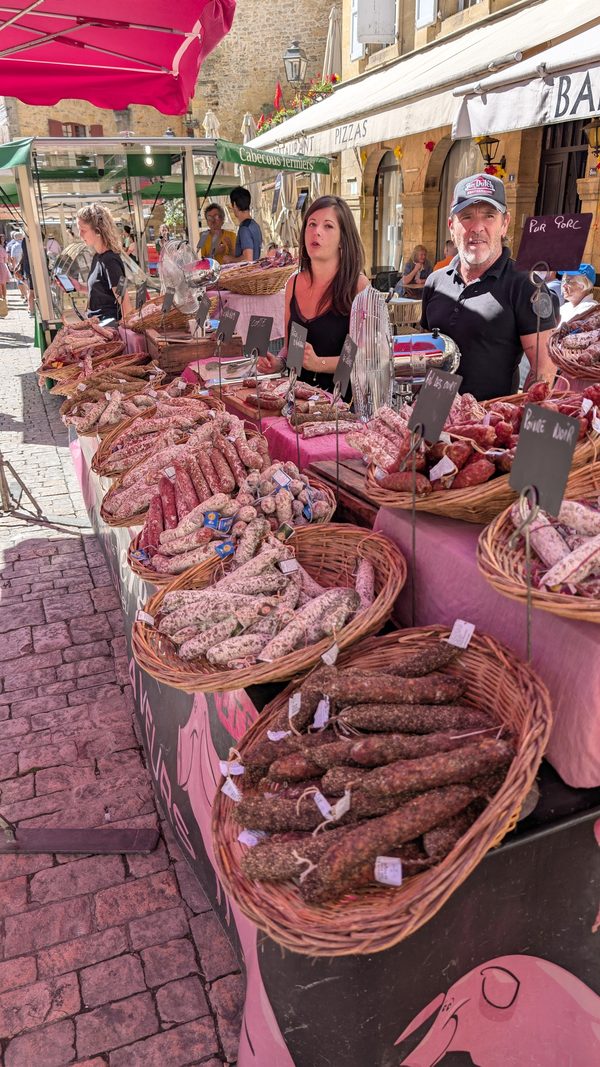
Market days in the Dordogne on our routes
Market days town by town on our Dordogne and Lot routes, from Sarlat’s Wednesday and Saturday markets to Domme and the village markets.
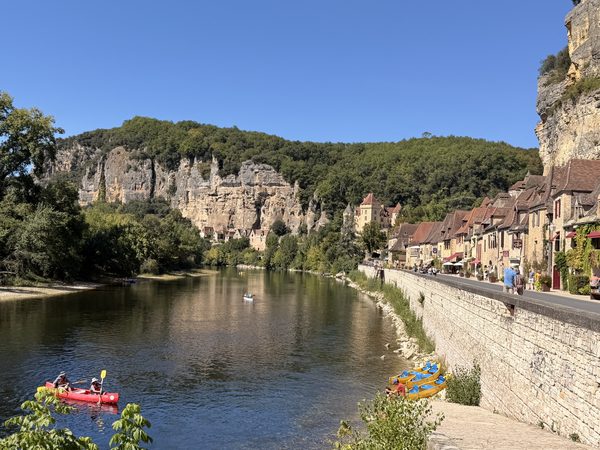
Premium Périgord
Premium Périgord: a gourmet self-guided walking tour in the Dordogne, with short walks, a 4★ spa hotel and a wine tasting. Start any day. 6 days from £950.
Not sure which holiday suits you?
See our self-guided walking holidays in France and our cycling holidays in the Dordogne, or tell Cassie a little about how you like to walk or ride and she’ll suggest a holiday. We reply within 24 hours, usually much sooner.
Premium Périgord
A Gourmet Journey
4.6 to 15.1 km (2.9 to 9.4 miles) a day · Easy to moderate
6 days · from £950 per person, sharing a double/twin room
Castles & Caves of the Dordogne
12.8 to 16.8 km (8 to 10 miles) a day · Moderate
8 days · from £1,075 per person, sharing a double/twin room

France’s Most Beautiful VillagesLes Plus Beaux Villages de France
15.5 to 23 km (10 to 14 miles) a day · Moderate
8 days · from £995 per person, sharing a double/twin room

Exploring Rocamadour
10.2 to 20.1 km (6 to 12 miles) a day · Moderate
8 days · from £1,025 per person, sharing a double/twin room

Ardèche Adventure
13 to 23.2 km (8 to 14 miles) a day · Challenging
8 days · from £1,095 per person, sharing a double/twin room

Six Villages to Rocamadour
New for 202717.9 to 23 km (11 to 14 miles) a day · Moderate
6 days · from £850 per person, sharing a double/twin room

Loubressac Walking Week
New for 202710.2 to 20.3 km (6 to 13 miles) a day · Moderate
8 days · from £1,175 per person, sharing a double/twin room

The Great Dordogne Walk
New for 202710.2 to 20.1 km (6 to 12 miles) a day · Moderate
14 days · from £1,995 per person, sharing a double/twin room

Cycling in the Dordogne
23 to 47 km (14 to 29 miles) a day · Moderate
8 days · from £1,250 per person, sharing a double/twin room
Sources
- Dordogne Périgord Tourisme, the Périgord truffle (diamant noir, season, oaks and hazels, dogs, pigs and the truffle fly, summer truffle May to August, ways to eat it, truffle visits) (dordogne-perigord-tourisme.fr)
- Dordogne Périgord Tourisme, the truffle growers of the Dordogne (host trees, limestone soils, truffières) (dordogne-perigord-tourisme.fr)
- Tourisme Lot, the truffle (black diamond of the Quercy, season, summer truffle) (tourisme-lot.com)
- Tourisme Lot, a day around the truffle (the brûlé) (tourisme-lot.com)
- Ministry of Culture, the black truffle of the Quercy at Lalbenque (brûlé, truffières, hunting with a pig, the truffle fly) (culture.gouv.fr)
- Lalbenque, truffle growing (dogs, pigs, the cavadou, season) (capitaledelatruffe.lalbenque.fr)
- Lalbenque, the truffle market (Tuesdays, December to March, the bell and the whistle) (capitaledelatruffe.lalbenque.fr)
- Écomusée de la Truffe, Sorges (symbiosis, the truffles of the Périgord, summer truffle) (ecomuseedelatruffe.com)
- Écomusée de la Truffe, storage and recipe ideas (truffle on buttered toast) (ecomuseedelatruffe.com)
- Dordogne Périgord Tourisme, the Écomusée de la Truffe (restored farm, truffière trail, demonstrations) (dordogne-perigord-tourisme.fr)
- Sarlat town hall, opening of the truffle markets (Saturday retail market, Wednesday wholesale market) (sarlat.fr)
- Dordogne Périgord Tourisme, truffle markets 2026–27 (Sarlat, Sainte-Alvère) (dordogne-perigord-tourisme.fr)
- Grand Périgueux tourist office, Sainte-Alvère truffle market (inspection, opening to the public) (tourisme-grandperigueux.fr)
- Grand Périgueux tourist office, the truffle (storage with rice or eggs) (tourisme-grandperigueux.fr)
- Grand Périgueux tourist office, Sainte-Alvère (summer truffle market mid-June to mid-July) (tourisme-grandperigueux.fr)
- Tourisme Occitanie, the truffle (Limogne summer market) (tourisme-occitanie.com)
- Sarlat tourist office, the Fête de la Truffe (mid-January, organisers, programme) (en.sarlat-tourisme.com)
- Dordogne Périgord Tourisme, Fête de la Truffe 2027 (16 and 17 January) (dordogne-perigord-tourisme.fr)
- Sarlat tourist office, Musée de la Truffe (9 Rue des Consuls, listed building, immersive visit) (en.sarlat-tourisme.com)
- Dordogne Périgord Tourisme, a truffière visit near Saint-Cyprien (summer visits in July and August) (dordogne-perigord-tourisme.fr)
- Dordogne Experience, Premium Périgord (Truffle Museum visit and tasting) and our guide to walking with your dog (dogs at the museum) (dordogneexperience.com)