
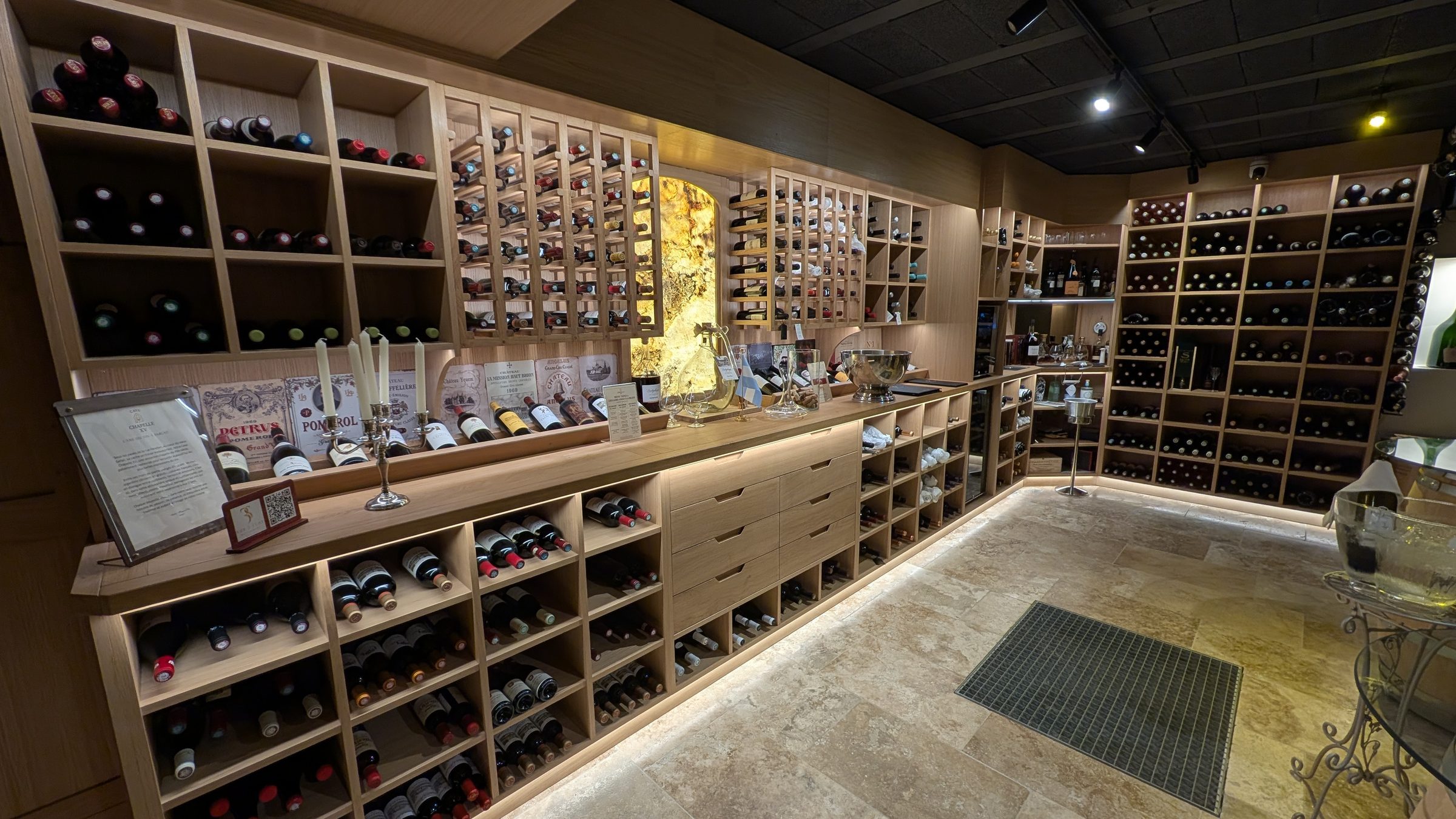
The Dordogne’s best-known wines come from around Bergerac, in the west of the department: reds, rosés and dry whites under the Bergerac name, the deep red Pécharmant, and the sweet white Monbazillac. Across the border in the Lot, Cahors is the dark red wine made mainly from Malbec. Two small local wines grow right on our routes, Vin de Domme and Coteaux de Glanes. None of our holidays goes to Bergerac itself, so a visit to its vineyards is a trip before or after your holiday; on Premium Périgord, a wine tasting with paired dishes in a 15th-century cellar in Sarlat is included.
For the food that goes with them, see our guide to the food of the Périgord.
By Cassie ·
At a glance
Bergerac
Reds, rosés and dry whites, the deep red Pécharmant and the sweet white Monbazillac
Cahors
The Lot’s red, at least 70% Malbec
Local wines
Vin de Domme and Coteaux de Glanes grow right on our routes.
Monbazillac
A 16th-century château among the vines, open for visits and tastings
Included
A wine tasting with paired dishes in a 15th-century cellar in Sarlat, on Premium Périgord
Bergerac and its neighbours
The Bergerac vineyards lie along the Dordogne in the south-west of the department, around the town of Bergerac, in the Périgord Pourpre. The Pays de Bergerac tourist office counts 10 AOPs covering 17 wines: reds, rosés, dry whites, sweet whites and dessert wines.
Names to look for:
Bergerac and Côtes de Bergerac: red, rosé and dry white Bergerac, and sweet whites from slightly over-ripe grapes under the Côtes de Bergerac name.
Pécharmant: deep, dark reds from a semicircle of hills north of Bergerac, a wine that rewards some ageing.
Monbazillac: the famous sweet white, from the slopes running up from the Dordogne south of Bergerac, an AOC since 1936.
Saussignac: a sweet wine from very ripe grapes, south-west of Bergerac.
Rosette: the smallest appellation, making light, fresh sweet whites north-west of Bergerac.
Montravel: reds and dry whites in the west of the vineyard; its neighbours Côtes de Montravel and Haut-Montravel make sweet whites.
Côtes de Duras: just over the border in the Lot-et-Garonne, making reds, rosés and dry and sweet whites. It shares a wine route with Bergerac.


The grapes
According to the Bergerac and Duras wine council, Bergerac’s reds and rosés are made from Merlot, the most widely planted grape, with Cabernet Sauvignon, Cabernet Franc and Malbec; Mérille is a red grape typical of the Bergerac vineyard. The whites, dry and sweet, are made from Sauvignon, Sémillon and Muscadelle, with some Chenin in Saussignac.
Monbazillac is made from Sauvignon, Sémillon and Muscadelle grapes touched by noble rot (Botrytis cinerea), picked by hand in several passes through the vines.
Visiting the vineyards
- Quai Cyrano, Bergerac: in the cloister of the Récollets in Bergerac’s old town, the wine house of Bergerac and Duras shares a building with the tourist office. There is a wine bar where you can try wines from the appellations, and a shop selling around 150 wines from the wine route’s growers.
- The wine route: the Route des Vins de Bergerac & Duras lists about 130 estates and châteaux that open their doors to visitors, with a map on the wine council’s website.
- The Château de Monbazillac: a 16th-century château among the vines, listed as a historic monument and owned since 1960 by the Monbazillac wine cooperative. You can visit the château and taste its wines; in 2026 a visit with a tasting glass cost €12, and a visit with a guided tasting of three wines €18. It is closed in January and February.
None of our holidays goes to Bergerac. As the crow flies, it is about 60 km (37 miles) west of Sarlat and about 40 km (25 miles) west of Les Eyzies, further by road, so it works best as a day or a night before or after your holiday.
Cahors and the Quercy
Cahors is the red wine of the Lot valley, made only as a red and an AOC since 1971. It must be at least 70% Malbec, known locally as Côt or Auxerrois, with Merlot or Tannat making up the rest. Its deep colour earned it the name “black wine”, and in the Middle Ages it was shipped to England through Bordeaux.
Coteaux du Quercy, from the south of the Lot and north of the Tarn-et-Garonne, makes reds and rosés based on Cabernet Franc.
Small local wines on our routes
Vin de Domme comes from the limestone slopes of the Céou valley below Domme. Abandoned after phylloxera and replanted from the late 1980s, it is now made by around 17 growers and sold under the IGP Périgord with the name Vin de Domme. The growers’ cooperative cellar is at Moncalou, Florimont-Gaumier, where you can taste the whites, rosé and red.
In the Lot, the Coteaux de Glanes IGP, one of the smallest wine IGPs in France, covers seven communes around Bretenoux, on the Dordogne between Beaulieu-sur-Dordogne and Carennac, making red, rosé and white wines. Its growers sell their wines at the cooperative in Glanes.


Which wines are close to which routes
Premium Périgord and Cycling in the Dordogne pass through Domme, home of Vin de Domme, so look out for a glass of it there. France’s Most Beautiful Villages, Exploring Rocamadour and Six Villages to Rocamadour are close to Coteaux de Glanes country, and Cahors is the Lot’s red. On every route, the Bergerac and Monbazillac vineyards lie further west.
Walnut wine and liqueurs
Vin de noix, walnut wine, is made in June from green walnuts steeped in wine with spirit and sugar, and served as a sweet aperitif or after dinner. Every family has its own recipe. Don’t confuse it with eau de noix, a stronger spirit made from green walnuts. Try a glass of walnut wine before dinner if your hotel offers one.
Wine on our holidays
On Premium Périgord, a wine tasting in Sarlat is included: local wines in the Cave Chapelle XV, a 15th-century vaulted cellar at Aux 3 Sens, each paired with a small dish from chef Christian. On every holiday, dinner on most evenings is a good chance to try the local wines with the food they were made for.
Which holidays go there
Premium Périgord includes the wine tasting at Aux 3 Sens in Sarlat. Castles & Caves and Cycling in the Dordogne also stay in Sarlat, and Cycling in the Dordogne rides through Domme.

Premium Périgord
A Gourmet Journey
6 days · from £950 per person, sharing a double/twin room
A wine tasting with paired dishes in a 15th-century cellar at Aux 3 Sens in Sarlat, included.

Castles & Caves of the Dordogne
8 days · from £1,075 per person, sharing a double/twin room
Two nights in Sarlat at the end, with a free day.

Cycling in the Dordogne
8 days · from £1,250 per person, sharing a double/twin room
An optional ride to Domme, home of Vin de Domme, on day 3.
Questions
What wine is the Périgord known for?
The Périgord is known for Bergerac reds, rosés and whites, the red Pécharmant and the sweet white Monbazillac. Cahors, the Malbec “black wine”, comes from the neighbouring Lot.
What grapes are used in Bergerac wine?
Bergerac reds are made mainly from Merlot, with Cabernet Sauvignon, Cabernet Franc and Malbec. Bergerac whites, dry and sweet, are made from Sauvignon, Sémillon and Muscadelle.
Do your holidays visit Bergerac?
Dordogne Experience holidays don’t go to Bergerac, which is about 60 km (37 miles) west of Sarlat as the crow flies. Visit its vineyards, the Quai Cyrano wine house or the Château de Monbazillac before or after your holiday.
Is a wine tasting included on any of your holidays?
Premium Périgord includes a wine tasting at Aux 3 Sens in Sarlat: local wines in a 15th-century vaulted cellar, each paired with a small dish from chef Christian.
More to read
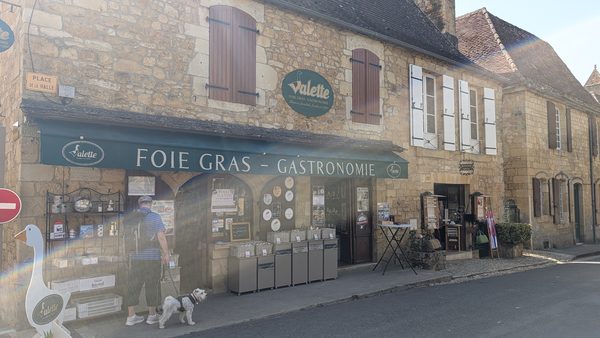
Food of the Périgord
Duck, black truffles, walnuts, cèpes and Rocamadour cheese: the Périgord dishes to look for, where to find them, and tips for eating out on your walk.
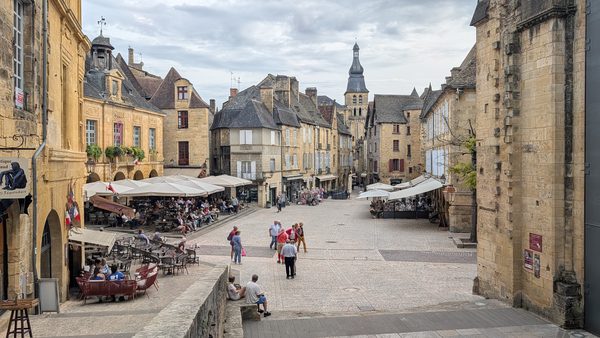
Truffles in the Périgord
The Périgord black truffle: how it grows and is found, the winter markets at Sarlat, Sainte-Alvère and Lalbenque, the summer truffle and the Truffle Museum.
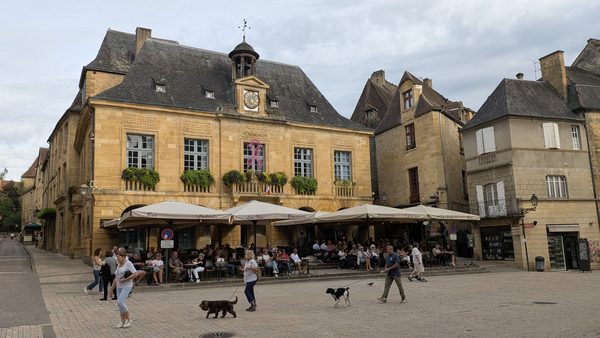
Sarlat-la-Canéda: a guide to the old town, markets and festivals
Things to do in Sarlat-la-Canéda: walk the medieval old town, the Wednesday and Saturday markets, the glass lift, the festivals and quiet evenings by gaslight.
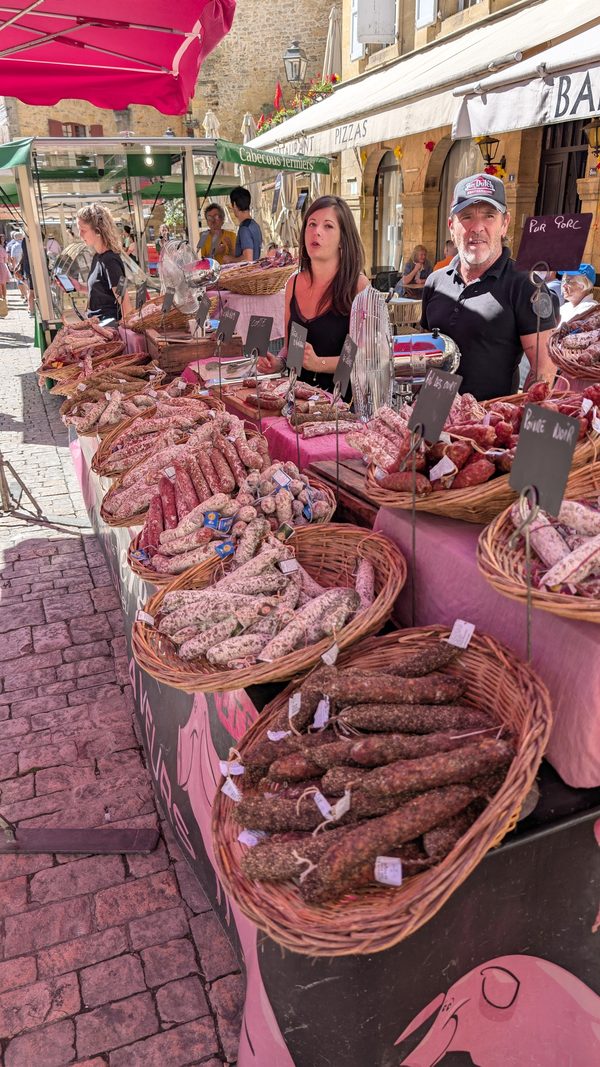
Market days in the Dordogne on our routes
Market days town by town on our Dordogne and Lot routes, from Sarlat’s Wednesday and Saturday markets to Domme and the village markets.
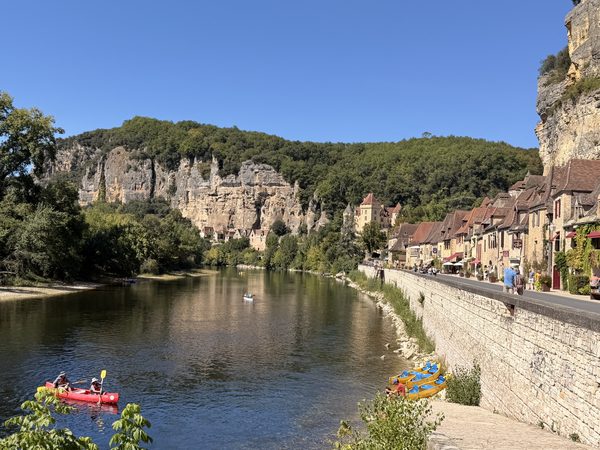
Premium Périgord
Premium Périgord: a gourmet self-guided walking tour in the Dordogne, with short walks, a 4★ spa hotel and a wine tasting. Start any day. 6 days from £950.
Not sure which holiday suits you?
See our self-guided walking holidays in France and our cycling holidays in the Dordogne, or tell Cassie a little about how you like to walk or ride and she’ll suggest a holiday. We reply within 24 hours, usually much sooner.
Premium Périgord
A Gourmet Journey
4.6 to 15.1 km (2.9 to 9.4 miles) a day · Easy to moderate
6 days · from £950 per person, sharing a double/twin room
Castles & Caves of the Dordogne
12.8 to 16.8 km (8 to 10 miles) a day · Moderate
8 days · from £1,075 per person, sharing a double/twin room

France’s Most Beautiful VillagesLes Plus Beaux Villages de France
15.5 to 23 km (10 to 14 miles) a day · Moderate
8 days · from £995 per person, sharing a double/twin room

Exploring Rocamadour
10.2 to 20.1 km (6 to 12 miles) a day · Moderate
8 days · from £1,025 per person, sharing a double/twin room

Ardèche Adventure
13 to 23.2 km (8 to 14 miles) a day · Challenging
8 days · from £1,095 per person, sharing a double/twin room

Six Villages to Rocamadour
New for 202717.9 to 23 km (11 to 14 miles) a day · Moderate
6 days · from £850 per person, sharing a double/twin room

Loubressac Walking Week
New for 202710.2 to 20.3 km (6 to 13 miles) a day · Moderate
8 days · from £1,175 per person, sharing a double/twin room

The Great Dordogne Walk
New for 202710.2 to 20.1 km (6 to 12 miles) a day · Moderate
14 days · from £1,995 per person, sharing a double/twin room
Cycling in the Dordogne
23 to 47 km (14 to 29 miles) a day · Moderate
8 days · from £1,250 per person, sharing a double/twin room
Sources
- Pays de Bergerac tourist office, appellations (10 AOPs for 17 wines, styles) (pays-bergerac-tourisme.com)
- Wikipedia, Bergerac wine (grapes, Pécharmant, Rosette, Saussignac, Montravel) (en.wikipedia.org)
- Wikipedia, Monbazillac AOC (1936, grapes, noble rot, across the river from Bergerac) (en.wikipedia.org)
- France Today, 12 foodie experiences in the Dordogne (16th-century Château de Monbazillac) (francetoday.com)
- Wikipedia, Côtes de Duras (Lot-et-Garonne, AOC 1937, styles) (en.wikipedia.org)
- Dordogne Périgord Tourisme, wines (Bergerac and Duras, Vin de Domme, Route des Vins de Bergerac & Duras) (dordogne-perigord-tourisme.fr)
- Wikipedia (French), Périgord IGP (Vin de Domme geographical unit) (fr.wikipedia.org)
- Wikipedia, Cahors wine (AOC 1971, 70% Malbec, terraces, villages, black wine) (en.wikipedia.org)
- Wikipedia (French), Coteaux du Quercy (area, red and rosé, Cabernet Franc) (fr.wikipedia.org)
- Wikipedia (French), Coteaux de Glanes (seven communes around Bretenoux, colours) (fr.wikipedia.org)
- Bergerac and Duras wine council, grape varieties (Merlot, Cabernets, Malbec, Mérille, Sauvignon, Sémillon, Muscadelle, Chenin) (vins-bergeracduras.fr)
- Bergerac and Duras wine council, Bergerac and Côtes de Bergerac (vins-bergeracduras.fr)
- Bergerac and Duras wine council, Pécharmant (vins-bergeracduras.fr)
- Bergerac and Duras wine council, Monbazillac (noble rot, grapes, picked by hand) (vins-bergeracduras.fr)
- Bergerac and Duras wine council, Rosette (vins-bergeracduras.fr)
- Bergerac and Duras wine council, Saussignac (vins-bergeracduras.fr)
- Bergerac and Duras wine council, Quai Cyrano (wine bar, shop) (vins-bergeracduras.fr)
- Pays de Bergerac tourist office, Quai Cyrano (tourist office and wine house, Cloître des Récollets) (pays-bergerac-tourisme.com)
- Dordogne Périgord Tourisme, the Route des Vins de Bergerac & Duras (130 estates) (dordogne-perigord-tourisme.fr)
- Dordogne Périgord Tourisme, the Monbazillac cellar and château (16th century, historic monument, cooperative since 1960) (dordogne-perigord-tourisme.fr)
- Château de Monbazillac, visits (2026 prices and season) (chateau-monbazillac.com)
- Cahors wine council, the Cahors vineyard (AOC 1971, red only, at least 70% Malbec) (vindecahors.fr)
- INAO, Cahors AOP (inao.gouv.fr)
- Tourisme Lot, Cahors wine (Côt or Auxerrois, black wine) (tourisme-lot.com)
- Dordogne Périgord Tourisme, Vin de Domme (IGP Périgord, Céou slopes, replanting, 17 growers, the Moncalou cellar) (dordogne-perigord-tourisme.fr)
- Sarlat tourist office, the Vin de Domme cellar (tastings) (en.sarlat-tourisme.com)
- INAO, Coteaux de Glanes IGP (seven communes, one of the smallest IGPs, colours) (inao.gouv.fr)
- Tourisme Occitanie, Coteaux de Glanes cooperative (tastings and sales) (tourisme-occitanie.com)
- Dordogne Périgord Tourisme, Noix du Périgord (vin de noix in June, aperitif or digestif) (dordogne-perigord-tourisme.fr)
- Tourisme Lot, Noix du Périgord (vin de noix recipes) (tourisme-lot.com)
- Wikipedia (French), Cuisine périgourdine (eau de noix) (fr.wikipedia.org)
- Dordogne Experience, Premium Périgord (the wine tasting at Aux 3 Sens) and our holiday pages (routes through Domme) (dordogneexperience.com)